What is Critical Illness Insurance?
什麼是危疾保險?
Differs from general medical insurance, Critical Illness (CI) Insurance is a specialized type of health coverage designed to provide financial protection in the event of diagnosis of critical/severe illnesses. This type of insurance typically covers life-threatening conditions such as cancer, heart attack, stroke, and organ failure, among others, which can lead to a high mortality risk.
有別於一般醫療保險,危疾保險是一種專門的健康保障產品,旨在於被診斷患上嚴重疾病時提供財務支援。此類保險通常涵蓋如癌症、心臟病發、中風、器官衰竭等危及生命,並可能導致較高死亡風險的疾病。
How It Helps?
為什麼需要危疾保障?




Why It Matters?
為何重要?
By providing immediate financial support, critical illness insurance helps reduce the stress of managing both health and money during difficult times, allowing the insured to focus on recovery rather than expenses.
危疾保險能為受保人即時提供財務支援,減輕在困難時期同時面對健康與財務壓力的負擔,讓受保人能專注於康復,而非費用問題。
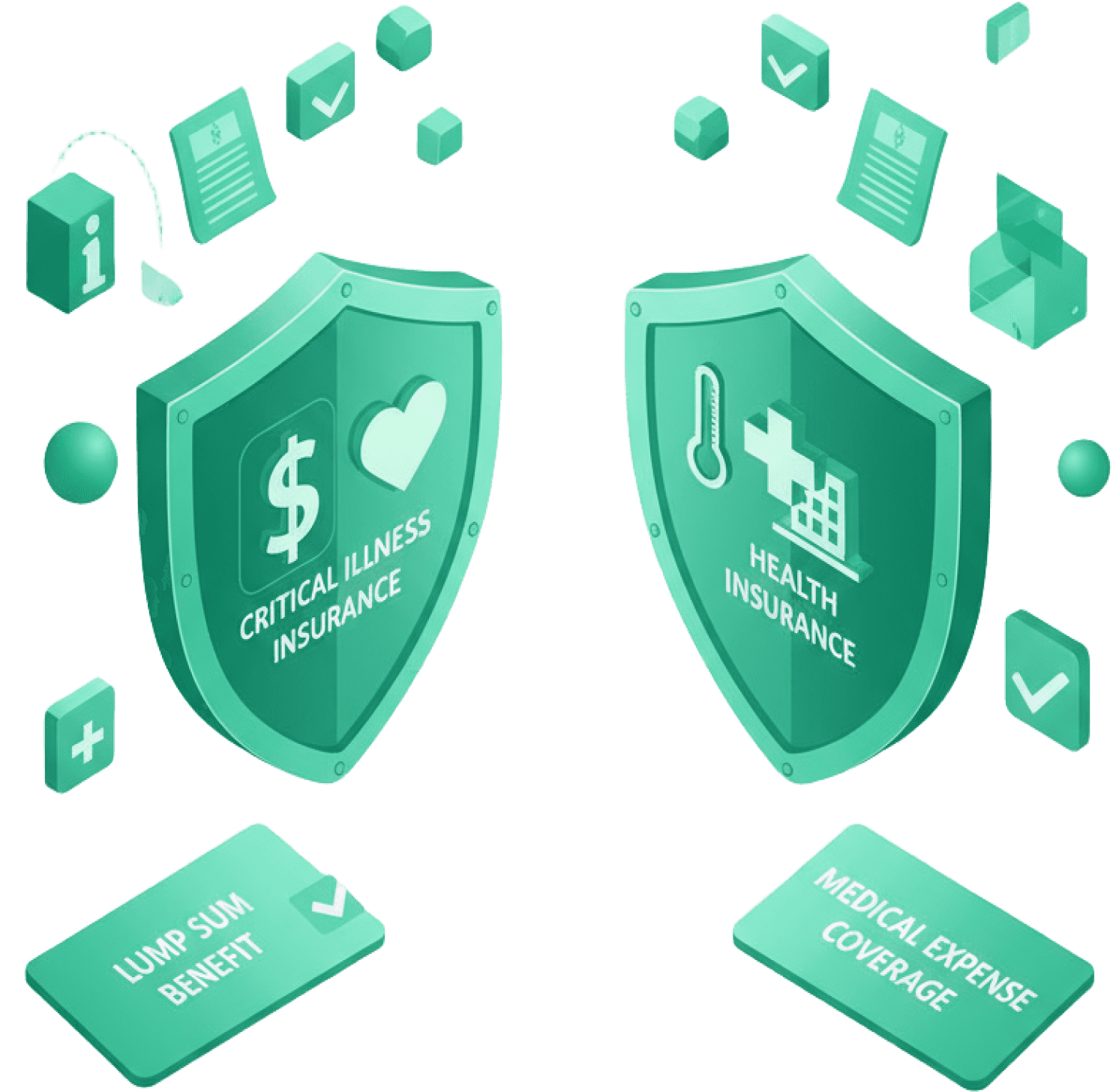
Critical Illness Insurance vs Health Insurance
危疾保險與醫療保險的分別

Standardization of Critical Illness Definitions
危疾定義標準化
To foster public trust and confidence in insurance, a project has been initiated to standardize Critical Illness (CI) definitions in the Hong Kong insurance market.
為提升公眾對保險的信任與信心,香港保險市場倡議標準化危疾的定義,並已開展了相關工作。
With the standardization of CI definitions in the Hong Kong insurance market, the top four outcomes will be:
此項目將帶來以下四項主要預期成果:
Improving policyholders’ satisfaction with consistent claim outcomes when claims are submitted to multiple insurance companies;
提升保單持有人在向多間保險公司提出索償時,獲得一致理賠結果的滿意度;Enhancing the clarity of the contractual definitions;
加強合約條款定義的清晰度;Enhancing transparency and customer protection; and
增加透明度及保障消費者權益;以及Ensuring the CI definitions are up to date, reflecting the latest medical developments and diagnosis.
確保危疾定義與時並進,反映最新醫療發展及診斷標準。